Wednesday, April 27, 2011

Terrifying Tornado Video

I love crazy weather more than most, but this is frightening...


Untitled from Crimson Tide Productions on Vimeo.

Tuesday, April 26, 2011

Hara Hachi Bu


There is something really American about the idea of an all-you-can-eat buffet. It's like manifest destiny applied to mashed potatoes. Who could argue with that?


It's for this reason that I'm inclined to think the ancient lesson of hara hachi bu will struggle to catch on this side of the Pacific. Hara hachi bu is literally translated "eight parts out of ten full". It's a concept the residents of Okinawa have embodied in their eating habits for ages. In essence, it means that you stop eating when you feel 80% satiated. After reading about it, it seems too much like common sense to even elaborate further. Yet, I can't remember the last time I called it quits at the dinner table prior to at least a couple of "you've reached maximum capacity" messages being sent from my amygdala. Anyways, I thought I'd share- if for no other reason than it seems like a funny and appropriate word to yell out in the middle of the dinner table.


Monday, April 25, 2011

I Really Hope This Is Photoshopped

Speaking of life expectancy, Time has another good article (How To Live To Be 100) on the matter in their most recent issue. As always, it was full of the most recent developments and scientific research in the field as well as some funny anecdotes about about how someone who could be my great-grandmother could beat me at tennis...
When (Margaret Dell) was in her 80s, she played in a doubles tournament that required that the ages of both partners add up to at least 100. Her partner was in his early 20s; they won the tournament.
Now that's working the system! The article was all well and good until I flipped the page and saw this guy...


Believe it or not (I do not), this is Dr. Jeffry Life, a 72 year old. He's the face of Cenegenics, a medical institute that promotes "healthy aging". I say it's just creepy- and I choose to believe Photoshop was involved. But maybe that's just my pride talking.

If you need something to get that image out of your mind*, check out another article in Time from last year on the possibility of the first centenarian generation. It's much cooler than Benjamin Button's weird cousin.

(*Actually, it's probably too late.)

Friday, April 22, 2011

Toy Ads, Life Expectancy, and Gardening

It's been a while since I've posted a good visualization. I was scanning through David McCandless' Information Is Beautiful site and found a few that were too interesting to pass up...

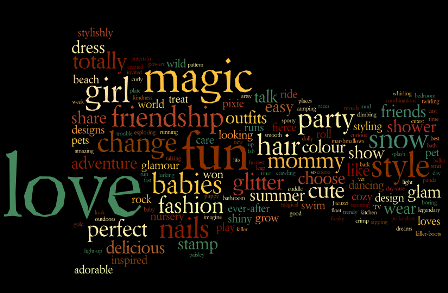
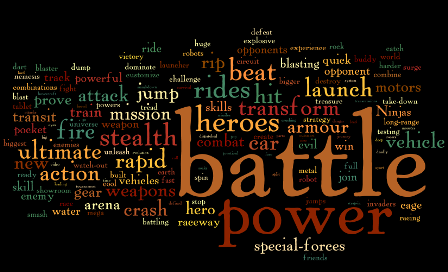
The following are word clouds reflecting the most frequent words in toy ads for boys and girls, respectively:

Most frequent words in toy ads for girls

Most frequent words in toy ads for boys

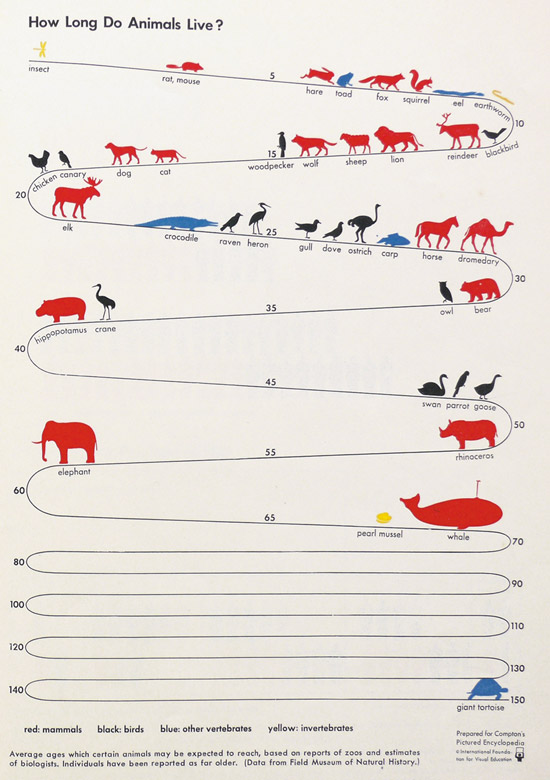
This one is actually classic from decades ago that McCandless found. It's a nice display of life expectancy in various animals. It also makes that whole tortoise and hare story take on a whole new meaning, doesn't it?


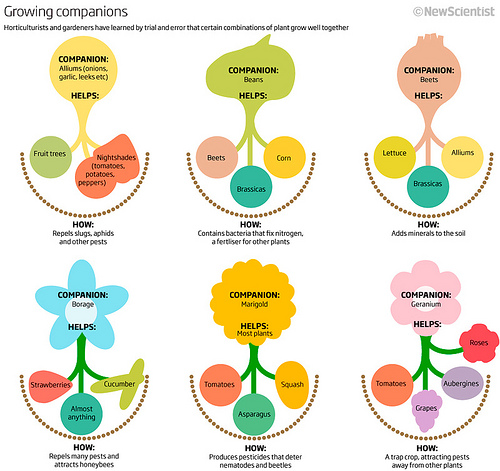
And finally, in the spirit of spring, McCandless links to a nice graphic from New Scientist showing great plant companions...


Saturday, April 9, 2011

Clocks and Calendars

I don't know what to make of this...

Don't ask me what got me to thinking about clocks and calendars (I would tell you, but I honestly don't know). However it happened, I noticed a strange difference between how each time-keeping mechanism conceives of concepts like beginning and completion. Take a look...

This is a clock.


This is a calendar.


Notice the difference?

No? Unless you're in the middle of a long car ride with nothing else to think about (if you are, please stop reading this and pay attention to the road), there's really no reason for you to.

Let's start with the similarities... the number 12. Not really much to explain here- both clocks and calendars have 12 distinct periods of time (hours and months, respectively). Easy enough. But now consider the ordering of those periods. Do you see the subtle shifting of periods from one mechanism to the next? Look first at the calendar. At the turn of a new year, we say that we are in the first month, January, which we abbreviate "1/1/2011".

But clocks are different. At the turn of a new day, we don't say that it's 1:00 AM but rather 12:00 AM. For clocks, the presence of any number indicates that which has been completed whereas for calendars, it indicates that which has begun.

I'm sure there is some profound significance here, some underlying psychological effect, perhaps. If so, I don't know what it is. Are calendars designed to be optimistic- creating the perception of an ongoing process, something not yet finished- while clocks are more pessimistic- only allowing us to acknowledge what has already happened with no guarantee that the hand will tick once more? Maybe sometime before 4/11 is over I will find out. But as of 1:21 PM today I have not.

Wednesday, April 6, 2011

Future Timeline: Consumer, Government, and Military Technology (Reactions)

Before reading this post, please be sure to check out the intro to the Future Timeline series.

PRIMER: In each of the five Future Timeline sections, we will list the relevant predictions from the FutureTimeline.net website. Beneath each individual prediction will be any specific comments from our panel. Following all of the predictions will be a section of general impressions from the panel.

Consumer, Government, & Military Technology (Reactions)


Question 1: What is your overall impression of the predictions?

JAMES: Most of the predictions either scare me (seriously) or they don’t interest me all that much. I don’t know how to explain it, I love my iphone (to the degree that it annoys my wife) and I’ve figured out how to wirelessly sync every entertainment appliance in my house to talk to each other. At the end of the day though, I’d much prefer a simpler, less “connected” life….than the ones described in these predictions. There’s a degree of privacy that I’d always like to be able to maintain, the “off” switch that seems to be subtly missing from many of these web-connected visions of our future selves. 

KARA: My general reaction is I felt like I was reading the plot line to a sci-fi movie. Some of these things do not seem so far fetched, like internet speeds, electronic data, exabyte storage...while others, like invisible clothes, force fields, and resurrecting wooly mammoths seem like the next great summer blockbuster to me. I don't think many of these things will happen, but it was entertaining to read the predictions anyway.

DUSTIN: While this week's set contained many more practical technologies, with which the average Earthling of yonder future would interact to a high degree, it obviously lacked the radical, game-changing potential of the first two sets. This, of course, means that the technologies predicted here will probably have an even greater overall effect on one's day-to-day life than the others. The "game-changers" get the hype, but always seem to let us down. On the other hand, no one cries foul when we're given more music than we could listen to in our lifetime on a device that could fit in our pocket- yet what single line of products has ever had a greater "game-changing" effect than the iLine? The thought of nanotech clothing, wireless electricity, and increased retail automation won't make me lose sleep at night. But I'd be willing to bet at least one of these will significantly change my life at some point. Conscious robots and aliens from space? Let's say it's unlikely.


Question 2: What is the biggest oversight of these projections? (What wrong assumption do they make or what idea do they neglect to consider?)

JAMES: I missed the predictions from last week entirely, but in the predictions before those I commented on the Political landscape and how there was very little mention of politics/policy. I guess I have to echo that here, while I realize the predictions are just bulleted thoughts on our future at given points in time, I think there are immense policy changes that have to take place to allow for this. Essentially the governing bodies of the world are going to have to be at a relative place of stability to allow such scientific progress to take place. I think someone else mentioned the idea that progress has historically happened during periods of governmental stability - and that makes perfect sense to me. Perhaps the predictions are simply holding political stability constant in order to layout a timetable and I can accept that to a certain degree. I definitely think that in reality certain sections of these predictions will be delayed for various political reasons. 

KARA: I think the main oversight is timing. The second main oversight in my opinion, is people's opinions. Some of these predictions will radically and fundamentally change how we relate to each other and the world around us. I don't think there will be anything less than mass vocal outrage at some of these options. I think for as awesome as Star Wars, Star Trek, and Quantum Leap are to watch on tv, when it comes down to it I'm not sure we actually want our lives to be that way.

RYAN: With regards to the idea of the evolution of technology and the ever decreasing size needed for effective utilization of that technology, it is true that the capability of microscopic AI has the potential to change the face of the planet in medicine, marketing, apparel, warfare, and beyond. However, nanotechnology may not be the absolute solution that is pursued. As our technical capabilities improve, introductions of other, more effective technological breakthroughs may surpass the intended purpose of nanotechnology. While the world continues to shrink down the size of effective machines, they are just that... machines. Machines have a life-cycle, a maintenance regiment, and a failure rate without some kind of intervention. While the idea that robots could build, repair, and evolve other robots is not entirely out of the question, the dynamic of fuel consumption does raise some concerns. A more viable option, though similar in nature, is radically different and provides a more self-sustaining atmosphere for the future. There are reports that we are moving towards being able to create life, cells, etc. through means other than self-replication. We are toying with the idea of being able to program cells (actual living creatures) to be the objects in daily life. This would render the 'nanotechnology' machines obsolete, as would any other number of technological breakthroughs. I feel that the time line does not fully take into account the exponential rate of growth and discovery that we are currently experiencing.

With regards to the consumer world being automated, I again feel that the time line fails to recognize our current standing. RFID (radio frequency identification) chips have been around for decades and have been used in areas ranging from transportation to Wal-Mart security to our US Passports. The capability to associate items and charge an account as they walk out the door is already here with technology as old as we are. Intelligent advertising is shown through our facebook accounts, our gmail accounts, and the snail mail that we receive. It is evolving, but the capabilities have been there for at least the past few years. The Android operating software thrives on having access to our preferences and feedback and grows a network on it. 

DUSTIN: This may be true in other weeks, but I noticed it especially here- it seems that quite a few of these portraits of the future are identical to the images painted in my mind by Hollywood. I was intrigued by a high percentage of the predictions in prior weeks simply because of their novelty. Accordingly, I can't help but think there's a relative lack of imagination at play in this set. It's like they sat through a marathon of Minority Report, Star Trek, and Wall-E, wrote down a few dates, and said "yeah, that about does it". The thing I keep coming back to when hypothetically looking forward to these predictions or when looking back at prior technological eras is that we often never see these type of changes coming. Cars, planes, telephones, computers, etc.- essentially all of the technologies that dominate our lives- came upon us with little warning. So on the one hand I acknowledge the difficulty of predicting these types of technologies. But on the other hand I also don't see an enormous amount of originality in the predictions. Could it be that (just this once) Steven Spielberg and George Lucas have actually stunted our imagination?


Question 3: If you could pick one specific prediction among the ones on this list to come true in your lifetime, which would it be? Why?

JAMES: 2028 Printed Electronics are ubiquitous. I think this one has enormous implications for the consumer. I remember getting the first generation ipod and scratching my head trying to figure out how all that music fit on there. Let’s be honest, just five minutes before that I was trying to figure out how to transfer the music on there in the first place. It’s was truly revolutionary…at the time. It’s funny how technology is taken for granted in such a short time frame from introduction. So I like this one simply for my own benefits, I think it’s an interesting (albeit inevitable) technology.

On a more serious note, I think it’d be very interesting if 2035 Holographic recreations of dead people truly happen someday. I actually think that this would benefit the cause of faith groups around the globe. I whole heartedly believe in the existence of the soul, and that it’s something created by God for our glorification of him. No part of me thinks this can be replicated scientifically, so resurrecting dead people’s persona can only highlight the essence of what’s still missing in regards to the person in question. Maybe it’s a backwards way of thinking, or maybe I’m just way off - but it makes sense to me. 

KARA: Without question teleportation. Because how amazing would it be to be able to work in Tokyo, live in Australia, and vacation in Alaska, all within a matter of minutes. Of course, this is also one of those predictions that I don't think has any chance at all of coming true, but I can hope...

RYAN: I am a strong believer that wireless electricity is a possibility. The functions described in the prediction sound very similar to those of Nikola Tesla (1856 - 1943). His experiments were alarming and far ahead of his time.. And his eccentric exhibitions of engineering and supposedly infeasible concepts may not have helped his case. However, wireless electricity already has proof of concept without effect on human functioning on a small scale. I fear that the limiting factor in accomplishing this would be overpowering the existing utilities arrangements. Money speaks volumes and for anyone to have access to electricity, whether they paid the bill or not, would have billions or trillions of dollars gnawing at the pocketbooks of current providers.

DUSTIN: No question about it- fully automated homes (2070). If I could never worry about cleaning dishes, taking out the trash, paying my electric bill, or finding that screw driver I swore I left in the drawer... wait- did that prediction say 2070 is the day I go to Heaven? Indeed it did.


Question 4: If you could ensure that one specific prediction one this list would not come true in your lifetime, which would it be? Why?

JAMES: I guess the one that I least desire to come true in my life time is the thought transfer prediction for 2040. I don’t like the idea of someone breaking a firewall and being in my mind to one degree or another. Granted we are speaking of 20 years of security innovation, but it’s not that hard to break a firewall and it’s doubtful that “hackers” of 2040 have really be thwarted 100% by the powers at be. The though absolutely terrifies me. 

KARA: The mini cameras in clothes, glasses etc. etc. etc. being used everywhere for “life-casting” The invasion of privacy, the potential use for bad intentions, all the creepy stuff of knowing your life is being broadcast for everyone to see makes me not want it to happen at all. (as it turns out I would be a really bad reality tv participant because I just don't want to be watched all the time).

RYAN: I feel that the idea of a force field is a bit far-fetched for my lifetime. Though many of the elements are already feasible concepts, I don't believe that particular combination of lasers and plasma and nanotechnology would serve as a Star Trek worthy concept. I'm not sure why I feel so strongly about this, because for whatever reason I feel that even thought transfer could be possible. Thought, however, has been mapped using MRIs, Polygraphy, and facial recognition software. I feel that we are closer to being able to control things with thoughts (even if an implantable device is require) than having a force field that would protect us from harm.

DUSTIN: I'm going to have to surprise myself by saying flying cars (2079). There are just so many bad drivers out there (at least in Northern Virginia- maybe I'll move to South Dakota by then) that I couldn't imagine having to navigate the skies amongst such traffic. Just consider- roads in America are essentially stupid-proof. There are bright white lines to keep you in your proper lane, signs and billboards warning you well in advance of any strange conditions that might be too much for you to handle without prompting, and railings on the sides of roads in case you should fail to realize that you're 3 feet from a cliff. Even though we're driving at relatively low speeds, we still get in wrecks all the time despite these borderline-excessive safety precautions. And I'm supposed to get excited about flying in an unrestricted car that can move about in 3 dimensions instead of 2 at unrestricted speeds with these same lunatics? Yes, I'd still buy one- but that doesn't make it a good idea.


Question 5: If every single prediction on this list were to come true exactly how / when it is stated here, what kind of impact would it have on your view of the world?

JAMES: If every single prediction comes true exactly as laid out here, then humanity has lost a lot along the way. Or at least that’s how I would see it. I’m not anti-progress, but there is a point at which what we’re required to give up in terms of physical and social interaction in order for all of these advances to take place far outweighs the benefits of said advances. 

KARA: I would feel like my privacy was always invaded, my life was always on display, my life had been reduced to nothing more than a medium for collecting and transmitting data, and the personal interactions of life would be diminished for me. For many of these things I felt myself reacting strongly in a “I don't really like this prediction” manner. I don't want someone to be able to read my thoughts, I don't want someone to record my life, I don't want the grocery store to scan my cart and my microchip and send me on my merry way. While I understand the desire for life to be more efficient, and for data to be gathered to increase people's knowledge base, I don't think many of these things are worth it. If I'm with a friend, I want to talk to them, not just sit silently while our thoughts are transmitted to each other. While some of these things I think are designed to bring us closer together (hypersonic planes could get us to the other side of the world in a flash) I think some of them actually keep us further apart.

RYAN: If every prediction were to come true I think that I would be a little sad on the inside. While it may seem wonderful to be able to have force fields, transfer thoughts, be recognized commercially for anything you may want, need, or desire, and have any device or food at your fingertips at the touch of a button, I fear this would very quickly lead to our demise. The human mind needs something other than instant gratification and desensitization. If you take the physical combat out of the equation, it might as well be a video game where you have infinite lives, and those around you don't really matter because they're just characters in this fantasy world. I'd love to be able to speak with my dead loved ones, but on the other hand if I knew that I would have a virtual recreation of them, would I really appreciate them while they were really here? Would real people be as important with virtual people being created, our food and medicine being taken care of mechanically, and short thoughts sufficing instead of the art of conversing, speaking, and debating? Time will tell what the future holds, and some of the predictions are things that may benefit us all, while others have clear implications of destabilizing the way that peer interaction helps us grow. 

DUSTIN: This set of predictions represents a more subtle, but no less significant, potential shift in our world. Computers, Robots, and AI was about emergence- about a machine (created by man) becoming like man or, at the very least, becoming an essential companion. Space Exploration & Travel was about satisfying the pioneer / explorer nature that is in us all. But this set, it seems, is just about making things easy. Even more than that, it's about taking the work out of work. In essence, doing has become saying or perhaps even merely thinking. I don't know if it's true that "it doesn't matter if you win or lose, it's how you play the game". But I do know that it's important to at least play the game. These predictions seem to paint a picture of two baseball teams walking onto a field, plugging the profiles of their players into a computer, and going home once the computer generates a winner based on the probabilities of potential outcomes. This is an impossible scenario because where would the computer even get statistics from in the first place if the players had never played a game? Yes, it may matter most whether you win or lose. But at some level you have to merely enjoy playing baseball. If not, what are you doing? The hypothetical residents of this future-world do things by merely thinking them, without any toil or sweat whatsoever. But what it is that they're doing? Are they even necessary?

Tuesday, April 5, 2011

Future Timeline: Consumer, Government, and Military Technology (Part II)

Before reading this post, please be sure to check out the intro to the Future Timeline series.

PRIMER: In each of the five Future Timeline sections, we will list the relevant predictions from the FutureTimeline.net website. Beneath each individual prediction will be any specific comments from our panel. Following all of the predictions will be a section of general impressions from the panel.


2039
Nanotech fabrics are ubiquitous

Nanotech fabrics are everywhere now. They are available for a huge range of clothing, footwear and accessories, some of which are remarkable in their design. For instance, many clothes can be programmed to change their molecular structure to alter their color, texture or style. Others have self-cleaning abilities, with micro-thin layers of disinfectant to regulate germs and dirt.

DUSTIN: Hmm, what if the insides of clothes was made of cleaning nano-fabric? Could we conceivably eliminate the need to take showers? 

Others have more exotic properties. One such example is a material that can replicate the texture of geckos' feet. This allows people to stick to vertical surfaces, giving them Spiderman-like agility. In addition to outdoor adventurers and climbers, a number of radical activists are making use of this. Eco-protesters for example are often seen on the news, scaling prominent buildings to unveil banners and placards. A number of government offices and corporate headquarters are being targeted in this way - raising fears of more serious incidents involving terrorists. Many companies are forced to improve their security measures.

More advanced "chameleon"-style fabric is being utilized by special forces. This comes in the form of fully-enclosing suits which change color to match the wearer’s environment, providing a near-perfect means of camouflage.

2040
Fusion power is nearing commercial availability

A prototype commercial fusion reactor is entering its final phase of operation. DEMO (DEMOnstration Power Plant) is the successor to ITER and has built on the success of that project, achieving a number of major breakthroughs. Among the earlier problems which have now been solved are: containing the plasma at high enough temperatures, maintaining a great enough density of reacting ions, and capturing high-energy neutrons from the reaction without melting the walls of the interior.

Constructed from 2024 to 2033, DEMO is now close to being perfected - having undergone several years of testing, expansion and upgrades. Later this decade, it will be capable of producing a sustained output of 2 gigawatts (GW), making fusion commercially available for the first time.

2040
Thought transfer is dominating personal communications worldwide

The first generation of brain-computer interfaces reached the consumer market in around 2010. This technology was crude and limited to begin with: more of a novelty than a serious application. Devices could perform only the simplest of operations, such as directional commands.

Some university experiments were successful in creating text messages, using thought power alone, but were slow and required bulky equipment to do so. Advances by 2020 enabled the sending of messages via wireless headsets and visors - but the process remained sluggish and unreliable, often demanding a high degree of concentration.

By 2030, however, exponential progress had been made in mapping and understanding the brain and its neuroelectrical signals. This was filtering down rapidly to the consumer market. Detailed, real-time messages were becoming possible, using non-invasive methods. The graphical interfaces used in composing messages had also been much improved, with more intuitive navigation and features.

By 2040, the technology is largely perfected for everyday use. It works well and is cheap enough to have spread to even developing countries. Privacy and security issues have been resolved, with personal firewalls able to restrict any unwanted intrusion or hacking attempts. The headsets, visors and earphones necessary for users have been miniaturized and made more comfortable. Some are even fully implantable. Whether for business or personal use, people everywhere are now enjoying a faster, more sophisticated, more private way of communicating.

This form of "synthetic telepathy" - along with the convergence of other network-based technologies - is radically reshaping society and culture during this time. A speculative bubble is formed on the stock markets, with investors everywhere forecasting a revolution in telecoms. This temporarily overheats the economy, resulting in a crash similar to that of the dot com collapse of early 2000.

KARA: I guess this would take away the age old questions, “what are you thinking?” and “what were you thinking?!”


DUSTIN: We're obviously overlapping with the Computers, Robots, and AI section here. See comments from that section regarding the unresolved big questions about mind/brain and consciousness. 

2040
Claytronics are revolutionizing consumer products

Claytronics - also known as programmable matter - are now embedded in countless everyday items. This technology involves the manipulation of tiny devices known as catoms (claytronic atoms). Joined electro statically, these work in concert to produce dramatic changes at the macro scale.

Objects featuring these catoms can be radically altered in form and function. Furniture can morph into new types, for instance. A bed could suddenly become a sofa, or a large table. Chairs can be instantly moulded to precisely suit the individual. Walls, carpets, ceilings, doors and other surfaces can modify their color or texture on demand.

Electronic devices feature this exotic material. They can be highly adaptable to their environments, for instance - altering their structure to cope with dust and heat in a desert, then later shifting to resist humidity and moisture in a jungle, or even becoming completely waterproof. They can be personalized too: devices worn on the head or ears can mould themselves to fit the individual.

Many vehicles now make use of claytronics. Car surfaces can change color at the touch of a button. Or they can self-heal: fixing bumps, scratches and other damage. Tires can be instantly adapted for different terrain types or weather conditions. Transparent windows can be instantly blacked-out for privacy.

Claytronics are especially popular in children's toys, with figures taking on astonishingly lifelike forms. Various other everyday objects are now becoming highly configurable and morphable. Further into the future, claytronics will enable the creation of entire simulated humans.

NATHAN: Would these be dependent upon some continuous power source to retain their shape?  Would there be a ‘core’ shape to which it would revert in default?  There’s an authenticity issue with this again, though less so than others.


DUSTIN: Legitimate question here- was Transformers (the original show) based on the prospect of this technology or just the idea of shape-shifting in general?

2042
Nanotech robot swarms are the latest in military hi-tech

In addition to larger machines, a new class of miniature robots is now appearing on the battlefield. These are so small that they are barely visible to the naked eye, measuring less than a millimeter across. Viewed through a microscope, they would appear like tiny insects equipped with metallic wings and armed with diamond-sharp claws and teeth.

Individually, they are relatively harmless. However, the strength of these robots lies in their terrifying numbers, and their ability to work in autonomous networks guided by remote computers. Released from capsules dropped by UAVs, these machines are deployed in colossal swarms - often consisting of many trillions of individuals. At full spread, they can sometimes cover an area the size of a small town.

Collectively, they would appear like a diffuse, grayish cloud. For a potential enemy, the first warning sign of their approach might be a glittering of reflected sunlight in the distance. This would be followed by a high-pitched buzzing or humming sound, at the edge of the human auditory range. The next indicator would be the crumbling of trees, buildings and other nearby objects. Then the robots would attack... engulfing their victims like a swarm of locusts, eating through flesh within seconds and reducing organic material to dust.

Even those hidden within bunkers or underground shelters are vulnerable - the swarms dissolve all but the most heavily reinforced armor and can easily penetrate cracks, air vents, keyholes and the like. In addition to their offensive capabilities, nanotech robot swarms can serve in a defensive role. By floating at low altitude in the sky, they can provide cover to advancing ground forces, acting as a shield or “buffer” against incoming projectiles.

This form of technology is so deadly that it has been placed in the same category as nuclear, chemical and biological weapons by the UN. A number of international treaties are signed over the following years, limiting its use. Safety mechanisms are also introduced, minimizing its potential for adaption. Self-replicating variants, for example, are flat-out banned, as these could potentially consume the entire biosphere in a worst-case scenario. Fears are growing of a potential terrorist incident (or "nanocaust").

NATHAN: Banning the production of an existing or reachable technology does not have good success rates…

2042
Floating hotels in the sky are heralding a new era in luxury transport

Giant, vertical airships powered by a combination of hydrogen and solar energy are now a common method of holiday travel for the rich and famous. These ships are nearly 900ft tall when docked. They are capable of lifting 400 tons of payload, in addition to ferrying over 100 passengers and 20 crew to their destination.

Cruising at a maximum altitude of 12,000ft, the ships drift at a leisurely 60-90mph, depending on wind conditions. Popular routes include London to New York (37 hours) and Los Angeles to Shanghai (four days).

Huge internal spaces offer plentiful room for living, dining and relaxing. The lower deck contains a glass bottom floor, enabling passengers to view the land and sea beneath. Safety is ensured thanks to self-sealing lifting bags. These are made from nanotechnology materials that minimize any potential for skin rupture.

DUSTIN: Imagine The World, except a flying version. Wow.

2050
Smaller, faster, hi-tech automobiles

Soaring living costs - along with exorbitant taxes and measures relating to the environment - have led to cars and other vehicles evolving into smaller, cheaper, more energy-efficient designs. More people than ever before are choosing to live and work alone, while the number of children per couple has also dropped sharply; two additional factors which have led to these lighter, more compact vehicles - a large percentage of which carry no more than one or two passengers.

Nearly all cars in the developed world are now computer-controlled, while traffic flow and road management issues are handled by advanced networks of AI. The resulting fall in congestion has boosted some economies by tens of billions of dollars.

The inherent safety of being controlled by machine, rather than human hands, allows for much greater speed of travel: over 200mph on some motorways. Even when crashes do occur, which is extraordinarily rare, the built-in safety features and toughened materials (including the use of carbon nanotubes) means that fatalities are becoming virtually non-existent. Meanwhile, a number of the largest automakers are conducting long term research into hovering/flying vehicles, based on existing military technology.

DUSTIN: There is something uniquely human about the idea of movement or the sense of being on a journey. If we end up in a world where that sense is largely absent, the psychological effect would have to be negative (at least for some). Then again, I guess we just expand our "world" to the solar system or the galaxy?

2055
Traditional media have fragmented and diversified

By now, traditional Western news corporations no longer exist. News gathering, analysis and distribution has instead fragmented - shifting to millions of creative individuals, bloggers, citizen journalists and small-scale enterprises. Each of these works cooperatively and seamlessly, utilizing a "global commons" of instantly shared knowledge and freely available resources. This includes information retrieval not only from cyberspace but also the real world; embedded in everything from webcams and personal digital devices, to orbiting satellites, robots, vehicles, roads, street lamps, buildings, stadia and other public places.

Even people themselves have become a part of this collection process. Bionic eye implants (for example) can relay data and footage on the spot, in real time, from those willing to participate.

Traditional Western TV channels have largely disappeared, replaced by unique "personalized" web channels, covering practically any subject or combination of subjects imaginable. These are filtered and customized to the exact tastes and requirements of the individual and are viewable anywhere, at any time. They can be highly interactive and are often experienced in virtual reality settings, rather than on a screen. This is especially true of movies, many of which have non-linear plot lines allowing the viewer to influence the outcome themselves, or even to become characters within the film.

Mass advertising, too, has undergone a revolution in Western societies. Some of the oldest outdoor media still exist - such as posters, billboards and leaflets - which continue to survive in holographic and other forms. However, online web and televisual product/service information is now accessed almost entirely from on-demand, advanced customer feedback networks along with automated, semantic web assistants. Together these can provide instant, factual and trustworthy information on a highly personalized level: automatically filtering any marketing bias or corporate propaganda which might have influenced a consumer in the past.

Despite the increased choice and empowerment, one major consequence of this fragmentation (a trend which began in the 1980s) has been increased isolation of the individual. A decrease in the shared experience of media has led to a further decline in Western family and community life.

Poorer nations are still reliant on traditional forms of media gathering and information dissemination. However, in the decades to come, many of them will begin to make the transition too - thanks to exponential trends in price performance and improved access to web technology.

2062
Nanofabricators enter the consumer market

These all-purpose, desktop machines can reproduce a seemingly infinite variety of items. In effect, they are like miniature factories. They have been around for a while in certain military/corporate/medical environments, but are now filtering down to mainstream use.

In appearance, they have a combined washing machine/microwave oven form-factor. Raw materials are purchased separately, and can be loaded in solid, liquid or powder form. An interior compartment is accessed via a small hatch, where the objects are constructed atom-by-atom. The process takes a matter of minutes and the assembled items can be used immediately.

Electronic paper and circuitry, tools and equipment, replacement window panes, sheets of fabric, entire laptops... these are just some of the countless items available for nanofabrication. New schematics can be accessed from the web and programmed into the machine.

2065
Invisibility suits are in military use

Once considered purely theoretical, advances in metamaterials have enabled the creation of truly invisible camouflage suits. When activated, these render the wearer completely transparent.

Breakthroughs in earlier decades showed that objects utilizing metamaterials could be made invisible to microwave radiation. This was followed some years later by infrared radiation, until eventually all the frequencies of visible light on the spectrum could be filtered. When combined with advances in nanotech, this made it possible to produce lightweight fabrics that could bend light in three dimensions.

A complex "mosaic" of nano-implants is embedded into the suit. These mosaics are stacked in layers: one for each frequency of the visible light spectrum. The effect is similar to that of a river flowing around a boulder. Light flows around the suit, before continuing in a straight line towards the onlooker.

The layers are so thin, and the implants so small, that the fabrics offer the wearer complete freedom of movement and flexibility. These suits are expensive, however, and are used mainly by special forces in covert operations. The only obvious vulnerability is when the suits are used in heavy rain, or if crossing a body of water.

2070
Fully automated homes

Buildings in developed nations are becoming highly automated and self-sufficient. In addition to robots, a typical new build home now includes the following:

A localized power supply. Energy can be generated by the building itself, via a combination of photovoltaics and piezoelectric materials. Walls, roofs and windows can absorb almost all wavelengths of light from the Sun with organic solar technology, turning it into heat and electricity. Friction generated by the occupant's footsteps - and various other kinetic processes - can also produce energy. This is converted and stored in any number of ways, from hydrogen to batteries. In countries where sunlight is less frequent, microturbines may be used in place of solar.

On-site water production and waste management. Rain is captured by external guttering, then stored and converted into drinking water using nanofiltration systems. This is especially useful in regions prone to drought (which includes a substantial portion of the world by this time). If local water is in short supply, houses can serve as miniature reservoirs and filtration systems. Meanwhile, plastics and other kitchen waste can be placed in recycling machines, ground into extremely fine powder, then later re-used in nanofabricators.

A multi-layered building envelope which provides a variety of dynamic effects. Windows can self-adjust their size and position - as well as their opacity - to optimize the level of natural light. In some of the more upmarket properties, the entire façade can morph its texture and appearance through the use of claytronics. Depending on the tastes of the occupant, this could transform into an art deco style, a classic Victorian building, or something entirely different. This form of "programmable matter" can even be designed by the occupant themselves and changed on demand.

Air purification systems. Air within the home is kept fresh, purified and completely free of dust and microbes.
Interactive surfaces. Holographic generators cover the whole interior of the property - including walls, doors, worktop surfaces, mirrors and shower cubicles. These intelligent surfaces can track the position of the occupant and display information whenever and wherever necessary. A person can read emails, see news reports and access the online world using virtually any surface in the house as a touch screen or mind control interface. Detailed, real-time information on their health, personal lifestyle and daily schedules can also be displayed. This system has a variety of other functions, e.g. it can be used to locate personal items which may have been misplaced.

Intelligent/self-maintaining appliances. Appliances that don't repair or maintain themselves in some way have become largely obsolete by now. It is very rare for a human engineer to be called to the house.

A modest size. The world is becoming an ever more crowded place, with available land continuing to shrink due to overpopulation and environmental decline. In city centers, apartments tend to be highly minimalist and compact, with small footprints and interiors utilizing every inch of space. Full immersion virtual reality is one method of adapting to this situation. However, another is with "flexible" room layouts that reconfigure themselves on demand. In earlier decades, this was achieved manually, using a sliding wall system. Today, it can be done remotely and automatically - using morph able claytronics.

2072
Picotechnology is becoming practical

Technology on the scale of trillionths of a meter (10-12) is becoming practical around this time. This is orders of magnitude smaller than the nanotech of previous decades. In the coming years, one significant development to come from this will be the Heisenberg compensators used in teleportation.

2079
Practical flying cars are entering the consumer market

Anti-gravity propulsion has been under development for almost a century now. Initially seen in military applications, it eventually found its way to the consumer market. Here, it began showing up in various luxury items and devices, such as hoverboards and floating recliners.

Further refinement of this technology - together with advances in AI, microjets and collision avoidance systems - has led to the dawn of a new era in personal transportation. In the late 2070s, it is not uncommon to see what citizens of earlier decades might describe as "flying cars" moving through cities.

In fact, these are light-duty vehicles based on earlier military VTOL (Vertical Take-Off and Landing) craft, but with slimmed down functionality and costs. They come in a variety of models and sizes, but are typically around 4 meters wide, and limited to a maximum of one or two passengers. By the end of this decade, they are becoming cheap, safe and numerous enough to be regarded as a mainstream form of transport.

The craft have a number of advantages over established forms of mobility. Since they float above the ground, they can access terrain and environments that would easily defeat traditional automobiles. This makes them popular with adventurers and explorers. They are also substantially faster than normal cars, able to reach several hundred kilometers per hour if necessary. They are more versatile and maneuverable than airplanes and can utilize a much greater volume of airspace. Since the traffic they generate is decentralized and there is so much available airspace, this makes them safer than both cars and airplanes, too. Collisions are almost unheard of, in any case, due to the onboard software and AI.

In addition, they use considerably less fuel than earlier forms of transport and require less maintenance. Some of the more expensive models are capable of reaching low Earth orbit for short periods. Others feature striking designs, often personalized by their owner - such as holographic decals and other accessories. These craft are being used by many businesses too (especially for rapid delivery of goods), as well as police and ambulance crews.

Further developments in anti-gravity will lead to bigger, more sophisticated versions - including recreational vehicles serving as truly mobile homes. Many previously inaccessible parts of Earth will become inhabited thanks to this, such as mountains and remote islands.

NATHAN: YEAH, RIGHT!  I’ve heard that before!  Heh…

2085
Macro-scale teleportation is achieved

Recent experiments in quantum entanglement - made possible by AI and picotechnology - have yielded major breakthroughs. It is now possible to teleport macro-scale objects from one location to another. The objects being tested are still very small (e.g. grains of sand), but are nevertheless visible to the naked eye, and retain their original structure following the procedure.

2110
Force fields are in military use

A combination of several unique technologies - stacked together in layers - has led to a radical new form of protective shielding. To observers from the previous century, this would resemble the "force fields" depicted in science fiction movies. When activated, it provides an instant, near-impenetrable field withstanding hits from all but the most powerful weaponry.

The outer layer consists of a supercharged plasma window, shaped into a dome or sphere by electromagnetic fields. This is hot enough to vaporize most incoming metals. A secondary layer underneath contains millions of curved laser beams, producing a high-energy web that captures projectiles fast or powerful enough to bypass the plasma window.

A third layer consists of a "lattice" made from trillions of carbon nanotubes. These microscopic structures are woven together in an instant, forming a diamond-hard shell repelling objects missed by the other two layers. If necessary, it can be extended to cover a larger perimeter, at the cost of decreased strength. Conversely, it can be reduced in size to provide an even denser and more durable barrier.

The layers described above can protect against the majority of bullets, bombs and projectiles. However, they are almost useless against lasers. A fourth and final layer takes care of this problem. It uses photochromatic particles, which change their properties when exposed to laser light, effectively neutralizing most directed-energy weapons. An early form of this technology was seen a century previously, with sunglasses that changed color when exposed to sunlight.

In addition to war zones, these multilayered force fields are being used in various other situations. National borders, for example, are being made more secure - as are many sources of food and water production. Corporate spaces and luxury dwellings owned by the rich are also utilizing them. A number of satellites are being fitted with this technology too.

2110
Femtoengineering is practical

Technology on the scale of quadrillionths of a meter (10-15) is becoming possible around this time. This is three orders of magnitude smaller than picotechnology and six orders of magnitude smaller than nanotechnology.

Engineering at this scale involves working directly with the finest known structures of matter - such as quarks and strings - to manipulate the properties of atoms. This development is a further step towards macro-scale teleportation, i.e. transportation of objects visible to the naked eye. Significant breakthroughs in anti-gravity and force field generation will also result from this.

Another area that will see major progress is in materials technology. For example, metals will be produced which are capable of withstanding truly enormous pressures and tensile forces. The applications for this will be endless, but perhaps one of the most exciting areas will be in the exploration of hostile environments - such as probes capable of traveling within the Sun itself, and tunneling machines that can penetrate the Earth's crust into the layers of magma beneath. Longer term, this development will pave the way for interstellar ships and the massive forces involved in light speed travel.

Other more exotic materials are becoming possible - including wholly transparent metals, highly luminous metals, frictionless surfaces, and ultra dense but extremely lightweight structures. As with many areas of science, femtoengineering is being guided by advanced AI, which is now trillions of trillions of times more powerful than unaided human intelligence.

2140
Teleportation of large stationary objects is possible

Teleportation of stationary objects around one to two meters in size is now possible. It will be many years before living, breathing subjects can be teleported, however. At present, use of this technology is strictly limited to:

scientific experiments
highly classified government activities
military operations
surface-to-orbit transportation of equipment
emergency situations requiring a rapid response

The maximum possible range of teleporters at this stage is limited to a few hundred miles.

2180
Antimatter power plants are coming online

A century after the global deployment of fusion, new forms of power production are becoming necessary in order to cope with the exponential rise in energy demands on Earth and elsewhere.

A new generation of power plants is becoming available, capable of harnessing the energy released in matter/antimatter collisions. The reactions involved are 1,000 times more powerful than the fission produced in nuclear power plants and over 300 times more powerful than nuclear fusion energy.

2190
Matter replication devices are available for the home

Towards the end of this century, home appliances are becoming available which can instantly reproduce almost any known substance, at quantum fidelity. This is achieved using a combination of femtoengineered components and exceedingly complex fractalised software, capable of handling the stupendous number of calculations involved. These devices are just one of many spinoff technologies resulting from the development of macro-scale teleportation in previous decades.

Originally used in factories, science labs and corporate environments, the machines were big enough to fill entire rooms, and often required huge amounts of power. They worked well for large enterprises but were completely impractical for the consumer market.

However, much like the IT industry, exponential progress in this field led to a rapidly shrinking form-factor. Combined with power conservation and heat dissipation techniques, a new generation of replicators began to evolve that were ultra-compact. Eventually they became small enough to fit on kitchen worktops.

Today, these devices are as cheap and commonplace as microwave ovens were in the late 20th century. They are most commonly used as food synthesizers, but a variety of other household items can be reproduced.

Raw mass resources - in the form of sterilized organic particulates - are stored in compartments within the machine. To save energy and computational power, these have been specially formulated to statistically require the least quantum manipulation. The user inputs their choice either via mind control, or voice activation. Molecular analyzers then scan each and every subatomic particle, while trillions of Heisenberg compensators maintain cohesion as the object begins to materialize, held in place by micro force-fields. The process takes a matter of seconds and can be repeated indefinitely - resources are beamed in from an external supplier, like tap water.

A vast database containing information on food, clothing and other objects is constantly maintained online. This is automatically downloaded into each machine, and contains many freely available programs.

These devices will play a major role in eliminating poverty, disease and hunger throughout the world. Traditional agriculture, manufacturing and distribution will become obsolete, replaced by purely information-driven systems that are completely decentralized.


Future Timeline: Consumer, Government, and Military Technology (Part I)

Before reading this post, please be sure to check out the intro to the Future Timeline series.

PRIMER: In each of the five Future Timeline sections, we will list the relevant predictions from the FutureTimeline.net website. Beneath each individual prediction will be any specific comments from our panel. Following all of the predictions will be a section of general impressions from the panel.


2014
Internet "lifecasting" enters the mainstream

Digital devices are continuing to shrink in size, becoming ever more compact and miniaturized. On-person webcams measuring less than a centimeter across are now being embedded in clothing, hats, spectacle frames and other discrete locations. This has led to the emergence of a new form of Internet blogging known as "lifecasting".

Rather than text updates, every moment of a person's daily experiences can now be captured on video, in real time. This is available on social networking sites, so that communities of users can "subscribe" to the lives of individuals they wish to follow. This includes a number of famous celebrities.

NATHAN: This seems like it would carry a TON of legal and privacy issues.  I assume there would be camera free zones (movies, bedrooms, boardrooms, offices, changing rooms, zoos, museums, etc.)

KARA: My initial reaction to this is complete fear. Three years from now there could be people walking around with cameras, all the time. It will be like Punk'd on steroids. What if I don't want my life broadcast by someone else? What if I don't want to be part of someone's video montage? Will everyone who is included in someone's video have to sign a release waiver? I'm sure this will initially be meant for social connection, much like Facebook is at its core, but I don't think it will take very long for this to be abused and used for “less than honorable” intentions.

2015
Scientists resurrect the woolly mammoth

New cloning technology has enabled the woolly mammoth - extinct for 5,000 years - to be brought back to life. 

Tissue samples are taken from a mammoth frozen in permafrost. The nuclei of a viable cell is then inserted into the egg cell of a female African elephant, which can act as a surrogate mother. Following a 600-day gestation period, the baby woolly mammoth is born.

Previous attempts to clone mammoths had failed, because the cell nuclei were too badly damaged by ice crystals; but new techniques have overcome this problem.

The mammoths take around 20 years to reach adulthood. By the 2030s, they are appearing in a number of zoos and private collections. Other extinct mammals are cloned too, such as the saber-tooth tiger and Megatherium.

KARA: Man dang. Four years from now Manny comes back. Ice Age will no longer be just a cartoon. If this were really possible I'd be on one hand exceptionally excited... who doesn't want to see a wooly mammoth wandering the great plains of Siberia? But, if this happens for Manny, then the next step will be resurrecting other animals, which will eventually lead to resurrecting humans...well, at least trying to resurrect humans. The moral and ethical questions, problems, discussions etc. that will abound with this technology are almost endless. Think the debate over stem cell research is hot, wait until someone tries to resurrect Aunt Sally.

DUSTIN: It can't be too many steps from creating a genetic copy of an animal to creating a genetic copy of a specific human, right? How long until we see famous graves being robbed to collect DNA samples? Come to think of it, anybody up for a field trip? Cha ching!

2016
Laser guns are in naval use

First trialled in 2010, laser weapons are now in use by a number of warships as part of their short-range defense. "Solid state" 32-megawatt beams of directed energy can be fired to a distance of more than two miles, hitting a target moving at over 300mph. This exceptionally accurate system can protect against anti-ship missiles, as well as shooting down drones and other flying vehicles.

DUSTIN: Moving from the decade of Star Trek (that was so 2005) to the decade of Star Wars?

2017
Electronic paper is seeing widespread use

This technology has been in development for over a decade and is now in widespread use. Organic thin film transistors (TFT) are combined with organic, electroluminescent displays. This produces flexible, paper-thin devices less than 0.3mm in thickness and capable of running high-quality video.

The applications are endless. They include true "e-books" and "e-papers" (which can also be read in the dark), clothes and other textiles with electronic displays, video posters, video leaflets, video cards, road signs that are self-illuminating, video instructions on food packaging and other boxed items.

NATHAN: WANT WANT WANT

Further development leads to much greater contrast ratio - resembling printed paper more than a screen (the latter is often hard to see in direct sunlight and other conditions). This technology also marks a step towards the first paperless offices, which in turn helps to reduce deforestation.

NATHAN: I SO want to believe this, but we’ve been hearing this for almost two decades now!

KARA: I'm onboard with reducing deforestation, but think of the resources that will be used to produce this e-paper. Factories, fossil fuels, transportation...at least trees are renewable. Is this really a better solution than good old fashioned paper? Working in a doctor's office, using electronic medical records, I can say I don't think paperless offices are possible...electronic or otherwise. And, if you're going to have paper, what's really wrong with the old fashioned kind made out of trees? Along with this goes the added cost to products and services that will use this technology. How much will a box of pop tarts cost now that the paper has video instructions on it? (and how much fun would Brian Regan have with that?) Maybe I'm just missing the point altogether, but this idea does not sound like a good one to me.

2020
Texting by thinking

In 2020, mobile phones are becoming available with the option of texting by thought power alone. A sensor-mounted headset is worn by the user. This contains brain-machine interface technology, which analyses brain waves and converts them into digital signals.

NATHAN: How to distinguish between idle, fleeting, and/or private thoughts and intentional, directed ones?  Sometimes I can’t even do that in my own head!


DUSTIN: The ADD kids are in trouble.

Some of the higher end models feature glasses or visors, with displays built into the lenses. This allows completely hands-free texting, effectively creating a form of electronic telepathy. The process is rather slow at this stage - requiring a high degree of concentration - but advances in the coming decades will revolutionize communication.

NATHAN: WALL-E

KARA: This is better than talking to text? How will the sensor filter out what is meant to go in the text, and what is thought of as you're walking down the sidewalk avoiding the dog that's walking your way. This being available 9 years from now does not seem likely.

 DUSTIN: For the record, I totally predicted the glasses with screens. And yes, it was prior to Mission Impossible 2.

2020
Holographic TV is mainstream

Breakthroughs in rewritable and erasable systems have made it possible to mass-market the first truly holographic TV displays. This form of technology had been in development for nearly three decades. One of the main problems encountered was that the displays required a lengthy delay between each "rewrite" - making it impractical for televisual displays. However, recent advances in power transfer have overcome this problem, with displays now capable of running at 24 frames per second.

Typical holographic screens of this period are relatively small. They are also very expensive, and still viewed as a luxury item for now. However, further refinement of this technology leads to bigger, more powerful displays; while competition between the major vendors later succeeds in bringing down costs, making them affordable to the majority of people.

The screens can either be fixed to a wall (with all the image writing lasers behind the wall), or placed horizontally on a table (with all the components underneath). Initially popular in Japan and the Far East, the displays rapidly find their way to the rest of the world and make traditional CRT and LCD screens obsolete. Over the next few decades perfection of this technology will see entire rooms turned into holographic environments.

NATHAN: Can you be in the middle of a scene, or will you still have to be removed from it because you’d block the image writing lasers?  This would make it just more authentic 3D

KARA: Help me Obi Wan. You're my only hope.

2022
Nanotech clothing enters the mass market

A variety of nanotechnology-based clothing is available now. This includes the first truly waterproof garments. These are made from polyester fibers coated with millions of silicone filaments. They are structured in such a way that water simply falls off, without leaving any dampness.

Other textiles utilizing nanotechnology include self-cleaning carpets. Millions of tiny fingers, embedded in the fabric, gently sway and lean towards the edge of the room, shifting dust and other garbage in a matter of minutes. Collectors fixed into the skirting board then gather and dispose of any detritus as necessary. This has already been used in hotels, luxury apartments and high-grade office buildings - but is now entering the consumer market thanks to falling costs.

Nanotech is also being used extensively by the military, as well as police forces. Ultra-lightweight but extraordinarily impact-resistant jackets and body armor are becoming available. Fireproof suits can also be made safer using these new materials.

2025
Vertical farms are appearing in many cities

In an effort to deal with potential food and water shortages, many cities are now building vertical farms. There are tremendous cost advantages of sourcing food locally, and the farms often use genetic modification processes, allowing them to harvest crops faster.

DUSTIN: I've always heard about this "upcoming technology" and wondered if theres an assumption of newly engineered plants. As it stands now, wouldn't vertical farms be quite limited by the lack of exposure to the sun. A vertical farm already cuts off half of the day's sunlight (which would already eliminate many of our current crops). But when I see pictures of these, they're always growing on the sides of skyscrapers downtown- wouldn't every building but the tallest have minimal direct sunlight? It just seems like the biggest improvement all in this projected technology would be the newly-bioengineered plants, themselves, rather than the design of the farms.

2026
Wireless electricity is ubiquitous

All electric/electronic appliances now have antennas in place of batteries, and draw power from a single power node mounted in the ceiling of a room - eliminating the need for multiple wall sockets and bulky cables. This greatly reduces clutter in homes and offices.

A magnetic coil is housed in a small box, which can be set into a wall or ceiling. Powered by mains, this resonates at a specific frequency. Electromagnetic waves are transmitted through the air. These are received by a second magnetic coil, fitted in the laptop/TV or other appliance. This resonates at the same frequency as the first coil and absorbs energy, charging the product.

This technology began with small, short-range devices such as phone charger pads and electric toothbrush holders. Improving efficiency made it possible to beam power over distances of many meters. This allowed it to spread to larger and more energy-hungry products, such as televisions, computers and even vehicles. A universal standard was also adopted - ensuring compatibility and greatly expanding its mass market appeal.

DUSTIN: Do you have any idea how many of my laptops and cell phones would still be working if I didn't have to use those poorly designed plugs- the ones that expand the input slot on the device ever so slightly each time you plug and unplug it? Verizon and HP are going to have to find new ways to steal my money.

The system is completely safe to humans. By the late 2020s, it is ubiquitous in homes and workplaces throughout the developed world. Eventually, power lines begin to disappear from streets, with electricity passed wirelessly from building to building. Laptop users in cafes and airport terminals are able to utilize "WiTricity" hotspots. This does for battery life what WiFi did for the Internet.

KARA: In related news, brain tumors and cancer are on the rise.

2028
Printed electronics are ubiquitous

The printed electronics market has seen exponential growth. By now, it has ballooned to over $300 billion globally - even overtaking the silicon integrated circuit industry.

This technology began with a small number of niche, high-end products. It expanded rapidly in the 2010s, thanks to plummeting costs and improved production methods. By the 2020s it had exploded into the mainstream - creating a whole new generation of ultra-thin electronics.

Today, these have such low fabrication costs that they are ubiquitous, being present in countless everyday business and consumer applications. Many previously bulky and heavy devices can now be folded, stored or carried as easily as sheets of paper. This includes flexible TV displays that can be rolled or hung like posters, wearable mobile phones, electronic newspapers with moving pictures, disposable netbooks, "smart" packaging and labels with animated text, signage in retail outlets that can be updated shop-wide at the touch of a button.

Multimedia players with expandable, fold-out touchscreens are especially popular. Even low-end models are now the size and weight of credit cards and can easily fit inside a wallet. With petabytes of storage, gigapixels of screen resolution and superfast transfer speeds, they are millions of times more powerful than iPods of previous decades. They are also completely wireless - no cables or physical connections of any kind are required, and music can be enjoyed using wireless earphones.

2029
Heavy automation of supermarkets and retail environments

In developed nations, the majority of retail environments are now cashless. Automated systems have made it possible for customers to shop with little or no physical interaction with a checkout. Items are simply "scanned" as they pass out of the door. The customer is identified by a chip in their card, or with a prepayment transponder obtained from a vending machine outside the store. Transactions are then generated over the Internet.

This system greatly saves time, improves security and reduces costs for the retailer by eliminating the need for checkout staff. Customers can also utilize Augmented Reality, to quickly locate shop items. A shopping list on their mobile phone can direct them to the appropriate aisle and shelf. High-end users can make use of glasses with displays built into the lenses.

KARA: While I'm all for convenience, and I use the self-checkout lanes at the grocery store whenever possible, this idea seems sketchy to me. I don't want to have to walk through a scanner as I leave the store and then have some sort of chip take money from me. How do you protect yourself if you lose your card? What happens if two people leave the store at the same time? I'm not sure the efficiency of scanning a full cart at one time outweighs the potential pitfalls.

2029
Intelligent advertising

Personalized adverts - similar in style to those seen in the film Minority Report - are becoming widespread by the end of this decade. Micro sensors embedded in posters and other outdoor media can identify people by the chips in their mobile phone, credit card and other personal effects. These adverts are then customized depending on the interests and lifestyle of the person in question.

Pairs of ultrasonic beams - targeted to intersect at specific points - deliver a localized sound message that only a single person can hear. This means that even in crowded situations, the adverts can be made personal and unique.

Civil liberties campaigners decry the use of such technology, given the anxiety and paranoia resulting from such marketing tactics; but the demands of business win through.

NATHAN: Discouragingly likely…

KARA: I don't pay attention to ads now, this would not make me pay attention to them any more. And, what happens in a place like Time's Square where there are hundreds of ads within eyeshot, and thousands of people? Whose ads are chosen?

2030
Full weather modeling is perfected

Zettaflop-scale computers are now available for scientific establishments. These systems are a thousand times more powerful than those of 2020 and a million times more powerful than those of 2010.

One field seeing particular benefit during this time is meteorology. Weather forecasts can be generated with 99% accuracy over a two week period. Satellites can map wind and rain patterns in real time at extraordinary resolution - from square kilometers in previous decades, down to less than 10 square meters now. Long-term global warming and climate modeling can also be achieved in far greater detail than ever before.

KARA: Doubtful. Anyone whose ever lived anywhere knows the weather can change in a moment's notice. 


DUSTIN: Now that's a deterministic prediction, if I've ever seen one. The person who came up with the quantum computing prediction later on would be disappointed.

2031
Web 4.0 is transforming the Internet landscape

Further convergence of the online and physical world has led to the emergence of "Web 4.0" - the next generation of internet. Semantic analyzing programs, having evolved into forms of AI, now perform a huge range of automated tasks for business, government and consumers. Running on massively parallel networks, these applications hunt for textual and visual data - combining the most subtle capabilities of humans (such as pattern recognition) with ways in which machines are already vastly superior (such as speed and memory).

In addition to serving as highly advanced search engines, they are playing a major function in the real world - gathering information from the array of sensors, cameras and other tracking devices now present in the environment, on vehicles, and even on people themselves.

Although privacy and civil liberties issues are being raised, this new generation of IT promises to bring enormous benefits to society. Crimes are faster and easier to solve thanks to these intelligent virtual agents; transport and logistics are smoother and more efficient; resources can be managed and distributed more accurately.

NATHAN: The issue arises with who will have control of these tools and how we can ensure their use for societally acceptable ends.  Does this mean no more revolutions or freedom fighters?  Does this mean no more ‘private’ illegality such as sharing an alcoholic beverage with your teenaged son or gambling at home?

In addition, practically every physical document in existence has now been digitally encoded, backed up and archived online. This includes full copies of all books, journals, manuscripts and other literature ever published - forming a complete repository of human knowledge going back thousands of years. These documents can be retrieved and analyzed using real-time speech commands, translated from any of the world's 6,000 languages and accessed via 3D holographic imaging.

Web 4.0 is also democratizing the Internet more than ever before. News agencies are finding themselves increasingly outmoded by bloggers and other social media when it comes to speed and accuracy of information.

NATHAN: This seems unlikely and merely a projection of current trends.  Already, we’re seeing blogging lose some of its cache.  I can only presume that social networking will as well.  I’m sure other forms of interactive internet media will fill the void, but the specifics of this prediction seem too grounded in 2011 reality to me.

2031
Chocolate has become a rare luxury

By now, chocolate has become as rare and expensive as caviar, with even a single bar costing $10-15. Drought, soil depletion and diminishing harvests in Africa - where two-thirds of the world's cocoa is produced - have led to soaring prices. Cocoa is also competing for agricultural space with other commodities like palm oil, which is increasingly in demand for biofuels.

Poor pay and working conditions have also been a factor. Many young farmers are now abandoning their lands and heading to the cities, in search of better and more highly-paid jobs.

KARA: If this is true, I am currently sad.


DUSTIN: Just leave me my Chick-fil-A cookies and cream milkshake, alright?

2032
Terabit internet speeds are commonplace

In addition to the benefits resulting from Web 4.0 (described earlier), connection speeds have also vastly improved. Bandwidth has been growing by roughly 50% each year. Many households in the developed world now have a terabit connection.

A significant number of these connections are now appearing on people themselves, in the form of wearable or implantable devices.

2033
Hypersonic airliners are entering service

Following decades of research and development, a new generation of airplanes are entering commercial service. These aircraft have a cruising speed of Mach 5 - or about 3,800 mph - enabling them to fly from Europe to Australia in less than four hours. With a range of more than 20,000km (12,000 miles) they can perform this journey without refueling and have excellent subsonic and supersonic fuel efficiency, thus avoiding the problems inherent in earlier supersonic aircraft. Furthermore, and perhaps more importantly, they are environmentally friendly. Being powered by liquid hydrogen, their only waste products are water vapor and small amounts of nitrous oxide.

Another advantage is that, while the 150 meter-long designs are much bigger than previous jets, they are actually lighter than Boeing 747s and can utilize conventional airport runways. They have moderate take-off noise, too. In many ways, they are the spiritual successor of Concorde.

DUSTIN: Moderate take-off noise... successor of Concorde? Wasn't the Concorde criticized for being incredibly loud?

However, they do not have windows. The heat generated by traveling so fast makes it difficult to install windows that are not too heavy. One solution to this problem has been the installation of flat screen displays, showing images of the scene outside.

KARA: This would be awesome. I'd sign up for a hypersonic flight from Nairobi to Denver in a heartbeat. Probably wouldn't be able to afford the ticket though.

2033
Holographic wall screens
Conference halls, office headquarters, modern art galleries and other such environments now have access to holographic wall screens (*). These are substantially larger versions of the TV projectors which have been in use since the 2020s. These upscale models are becoming so large that they can fill entire rooms. At this stage, they remain far too expensive for mainstream use in the home (except for luxury apartments owned by the rich and famous). However, they are a relatively common sight in workplaces, where video conferencing is playing an increasing role in business; and in entertainment venues such as movie theaters, nightclubs and stadiums.

Times Square in New York, Piccadilly Circus in London, and Shibuya in Tokyo now feature spectacular advertisement displays, with graphics appearing to literally "jump out" of the screen.

*NATHAN: It’s interesting to imagine what this does to the artistic media.  My first thought is of the renaissance masterpieces beamed out in holograph form, but I would imagine new means of artistic composition would arise to harness the new technology.

2034
Exabyte storage devices are available

Data storage devices are now available with capacities of more than one exabyte (a million terabytes). This might seem excessive to observers from earlier decades. It has become necessary in today's world, however, due to the exponential growth of information technology. The day-to-day experiences of the average person now involve a stupendous amount of data collection - especially for those using neural interfaces or biotechnology implants.

2035
Holographic recreations of dead people

Throughout this time many dead celebrities, presidents and historical figures from the past are "resurrected" online, via the immense AI and supercomputing powers now available. This phenomenon is aided by the recent human brain simulations that have been made possible. Data mining of every single word ever spoken, written, or otherwise recorded by the person is undertaken, then analyzed to recreate their character traits and emotions. This allows the construction of a highly accurate "shell" personality, surrounding a generic "core" program, run as an entirely independent AI simulation.

The project sparks much controversy when first announced (especially among the religious community) but soon gains momentum, as a whole host of actors, musicians, artists, scientists, politicians and other individuals from the past are made available. Advanced holographic techniques - combined with real-time audio-visual interaction - make them appear as lifelike as any other person alive in the world today.

This form of computerized resurrection is soon extended and made possible for ordinary citizens wishing to preserve a loved one in digital form; though once again, it is more popular among the non-religious (and the process is generally less accurate, since the average person tends to leave behind less data, written words, video recordings and other information for use in constructing the programs). The technology involved is also expensive. It is used only by the rich for now - or in certain public locations such as museums, galleries and other venues.

NATHAN: There’s a ‘good-enough-fakeness’ to this that is unsettling.  It’s like we’d happily give up an appreciation for the intangibles that make our interaction with someone REAL to have a less robust, less true version for longer.  I don’t doubt that there would be a market for such a thing, it just makes me sad.


DUSTIN: It will be very interesting to see how the human mind conceives of such "resurrections", especially when it's of a person with whom you have a personal connection. Can you say P.S. I Love You- The Sequel (not that I've watched the original)?

2035
Artificially-grown meat is available to consumers

Advances in tissue engineering have made it possible to actually "grow" meat - using just single animal cells. Having been in development for over 30 years, it has now reached the stage where it can be safely mass-produced and made available for the public.

The meat itself has a number of benefits. It is unusually pure, clean and healthy whilst retaining the original flavor, texture and appearance of traditional meat. It can also be produced without harm or cruelty to animals, being just a lump of cultivated cells. Perhaps most importantly, it has far less impact on the environment.

It is also much cheaper than ordinary meat, which is especially beneficial to developing countries, many of which have seen their agricultural systems ravaged by climate change.

Like GM crops and other such radical advances, a number of political and psychological hurdles stood in the way of its development. This meant its introduction to the mainstream was delayed by several years. However, the aforementioned crisis in farming - along with endorsements from animal welfare groups - gave added impetus and eventually pushed it through.

KARA: Has the organic movement died by this time? I'm going to stick with grass fed, free range meat, thanks though.


DUSTIN: They're going to need some brilliant marketing in the first years that this rolls out.

2037
Quantum computers are becoming available

Certain government agencies, universities and research institutes now have access to this revolutionary form of technology, which offers spectacular computing speed and power on a completely different scale to anything used before. These machines work by making direct use of quantum mechanical phenomena, such as superposition and entanglement, to perform operations on data. In addition to being trillions of times faster than earlier computers, they can be made absolutely secure, too. The machines' encryption techniques are virtually unbreakable, due to the almost unimaginable number of instructions being executed simultaneously.

2038
Teleportation of complex organic molecules

In the early 2000s, scientists were able to transfer particles of light (with zero mass) over short distances.
Further experiments in quantum entanglement led to successful teleportation of the first complete atom. This was followed by the first molecules, consisting of multiple atoms.

By the late 2030s, the first complex organic molecules - such as DNA and proteins - are being teleported.

NATHAN: Is the actual substance being transported from one place to another? Or is it being destroyed and simultaneously replicated somewhere else (in accordance with the laws of thermodynamics, of course!)? We come up to this ‘authenticity’ question again.

KARA: I have always wanted to be able to teleport.
This is a free demo result from the Wayback Machine Downloader. It is not a complete website.